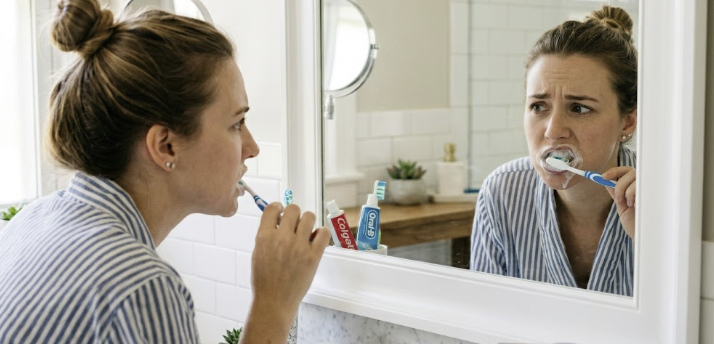
Your dentist has probably told you to brush twice a day. You are doing that. So why do your gums still bleed sometimes, or why does your enamel feel rough? The answer might not be that you are not brushing. It is that how you are brushing could be working against you.
Hygienists see the same mistakes over and over. Most of them seem harmless but add up over time. The good news is that once you know what you are doing wrong, the fix is simple.
The 8 Most Common Brushing Mistakes
1. Brushing Too Hard
This is the number one problem hygienists observe. Hard brushing does not clean better. It damages your gums and enamel.
When you brush aggressively, you are scrubbing away protective gum tissue and wearing down enamel. Over time, this can lead to gum recession, sensitivity, and exposed root surfaces that are more prone to decay. This damage is often irreversible.
Your toothbrush should feel gentle. If your bristles are splayed after two weeks, you are pressing too hard.
2. Using the Wrong Brushing Technique
Many people brush in horizontal back-and-forth motions. This scrubbing style is one of the least effective ways to clean and contributes to gum damage.
A better approach is gentle, short strokes at a 45-degree angle toward the gum line. Move from the gum line downward on upper teeth and upward on lower teeth. Circular or gentle vibrating motions also work well.
The key is consistency and gentleness, not speed or pressure.
3. Rushing Through It
Two minutes is the common recommendation, but it only works if you actually cover every area. Many people spend most of that time on front teeth and rush the back molars where plaque builds up the most.
Spend about 30 seconds on each quadrant: upper left, upper right, lower left, and lower right. If you naturally brush faster, you may need closer to 2.5 to 3 minutes.
4. Not Brushing the Right Surfaces
People often clean visible outer surfaces and skip inner and chewing surfaces.
Inner surfaces are common plaque zones, and chewing surfaces have grooves where plaque hides. A complete brush covers three surfaces per tooth: outer, inner, and chewing.
5. Brushing Right After Acidic Foods or Drinks
Brushing immediately after acidic drinks or foods can damage enamel.
Acid temporarily softens enamel. If you brush during that window, you can wear enamel away. Wait 30 to 60 minutes after acidic foods or drinks before brushing. If needed, rinse with water first.
6. Rinsing Vigorously After Brushing
Rinsing too aggressively washes fluoride away too quickly.
Fluoride works best when it stays on your teeth for longer. A gentle rinse with a small amount of water is enough. Some people simply spit without rinsing to keep fluoride protection in place.
7. Not Prioritizing Brushing Before Bed
Twice daily brushing is effective only if one session is before bed.
Saliva drops significantly at night, so plaque can sit on teeth for hours if you skip bedtime brushing. If you can only do one careful brush in a day, bedtime is the most important one.
8. Using a Worn-Out Toothbrush
Bristles fray over time and become less effective at cleaning.
Replace your toothbrush every 3 to 4 months, or sooner if bristles look splayed. Electric brush heads follow the same replacement schedule.
The Evidence-Based Routine That Actually Works
When: Brush twice daily, once in the morning and once before bed. Before bed is non-negotiable. Wait 30 to 60 minutes after acidic foods before brushing.
How long: Aim for 2 to 3 minutes with full coverage. Spend about 30 seconds per quadrant and clean outer, inner, and chewing surfaces.
How: Use gentle, short strokes at a 45-degree angle toward the gum line. Avoid horizontal scrubbing. Light pressure works best.
What to clean:
- Outer surfaces of all teeth
- Inner surfaces of all teeth
- Chewing surfaces of molars
- Along the gum line
- Your tongue (or a tongue scraper)
After brushing: Spit out excess toothpaste and rinse gently with a small amount of water.
Toothbrush choice: Use a soft-bristled brush, manual or electric. Medium or hard bristles raise the risk of gum damage.
Toothpaste: Fluoride toothpaste is effective and evidence-based. Whitening toothpastes can be more abrasive, so use them carefully if you have sensitivity.
Before-bed brushing is the key habit. Your teeth are least protected overnight, so this is where most long-term damage prevention happens.
What About Flossing and Other Tools?
Brushing removes about 60% of plaque. Flossing or interdental cleaning handles much of the remaining plaque between teeth. Good brushing and flossing work together, not instead of each other.
Tongue scraping can help reduce bacteria and improve breath, but it does not replace brushing.
The Reality
Your enamel and gums are designed to last a lifetime, but small daily mistakes add up over years. Receding gums, sensitivity, and enamel wear often come from habits that felt normal at the time.
The routine above is simple: gentle, thorough, and consistent. Technique matters more than expensive products. A careful three-minute brush beats a hard five-minute scrub every time.
Start by fixing one mistake at a time. Your gums can show improvement within weeks.
← Back to blog